

Tim Hoyle, Chief Investment Officer
Thoyle@haverfordquality.com
Resilience, Geopolitics, and the AI Earnings Boom
Markets have posted a strong start to the second quarter. From the lows of March 30th, the S&P 500 has advanced over 10% to reach new all-time highs, representing one of the fastest market recoveries in history. The S&P 500’s historic win streak is a result of investors’ optimism that despite the volatility of the situation, the U.S. and Iran are heading towards a long-term deal. As long as the trajectory of the war with Iran remains positive, investors appear to be inclined to look beyond geo-politics to focus on fundamentals, earnings growth, and AI.
As far as the macro-fundamental picture, Jamie Dimon summarized it best in his recent letter to shareholders: “Despite the unsettling landscape, the U.S. economy continues to be resilient, with consumers still earning and spending (though with some recent weakening) and businesses still healthy.” There are several tailwinds supporting this resiliency, including increased fiscal stimulus, the benefits of deregulation, AI-driven capital investment and the Fed’s asset purchases.
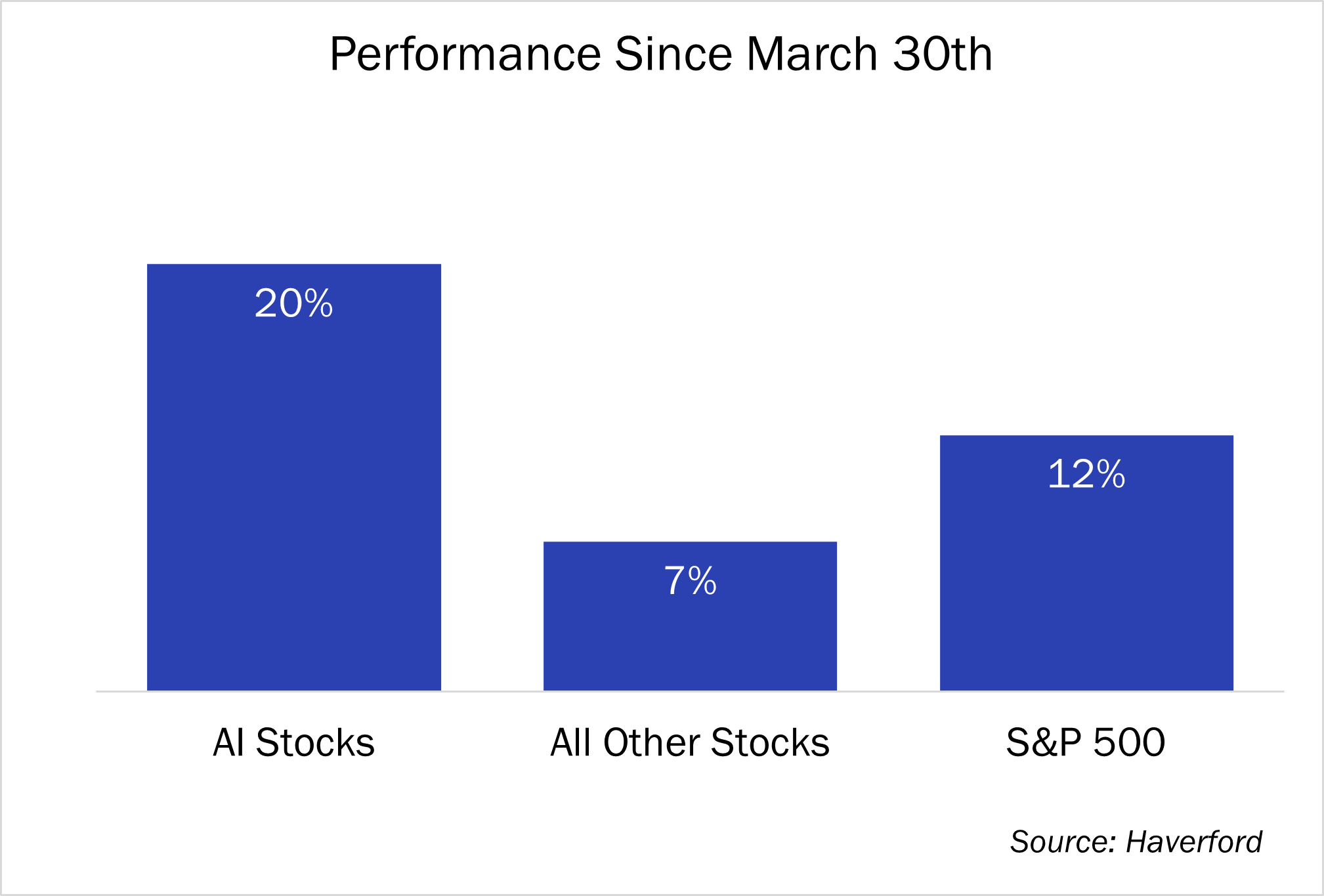
These factors, particularly AI capital investment, provide a very positive backdrop for corporate earnings. Looking back over the past 6 months, estimates for 2026 S&P 500 earnings have increased 6% from $303 to over $320, a rate of increase that has historically been reserved almost exclusively for post-recession periods. Full year 2026 earnings are now expected to grow 18% year-over-year. AI optimism and data center spending is the main driver behind the increase in S&P 500 earnings over the past six months. While the rise in all corporate earnings has increased 6%, estimates for the tech sector are up 19%. The relative performance of stock prices are taking their cue from the disparity in earnings growth. From the market’s March 30th bottom, a basket of AI stocks has rocketed higher by 20%, outpacing the market’s overall 12% return and the 7% return of all other index stocks.
Picture1
Disclosure: Past performance is not a guarantee of future results
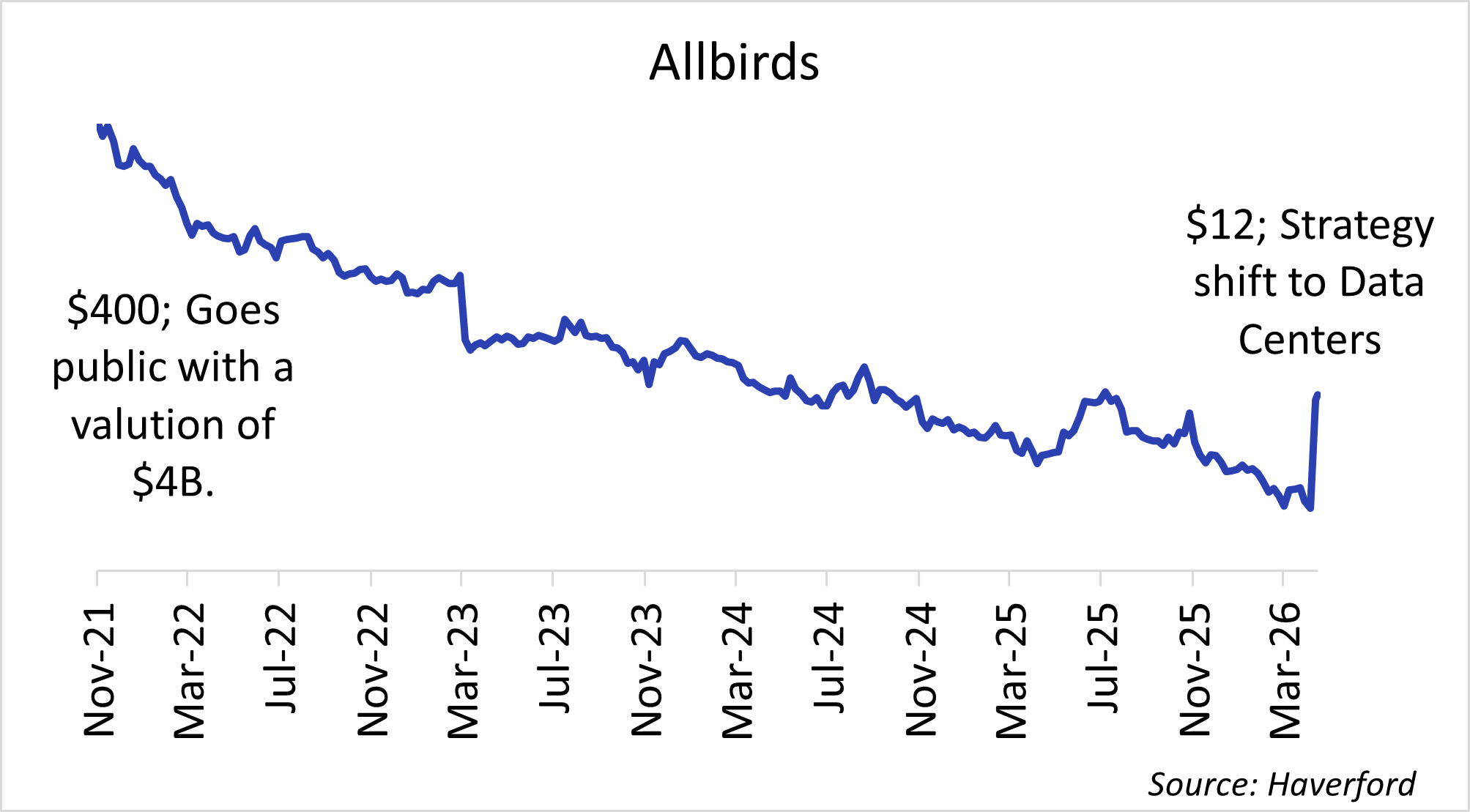
The increase in AI estimates, sentiment, and stock prices comes as investors recognize that there are extreme capacity shortages plaguing the planned data center buildout. For example, the need for memory chips has sent prices soaring. Micron Technology earnings estimates have catapulted from $17 to $70 per share for the 2026 calendar year. Even as the stock’s price has more than doubled, the stock’s price to earnings multiple has fallen to 6x. Investors seeking evidence of speculation and bubble-like behavior need look no further than Allbirds. The once maker of wool sneakers announced last week a pivot into data centers, sending the stock up close to 400%.
These factors, particularly AI capital investment, provide a very positive backdrop for corporate earnings. Looking back over the past 6 months, estimates for 2026 S&P 500 earnings have increased 6% from $303 to over $320, a rate of increase that has historically been reserved almost exclusively for post-recession periods. Full year 2026 earnings are now expected to grow 18% year-over-year. AI optimism and data center spending is the main driver behind the increase in S&P 500 earnings over the past six months. While the rise in all corporate earnings has increased 6%, estimates for the tech sector are up 19%. The relative performance of stock prices are taking their cue from the disparity in earnings growth. From the market’s March 30th bottom, a basket of AI stocks has rocketed higher by 20%, outpacing the market’s overall 12% return and the 7% return of all other index stocks.
Picture6
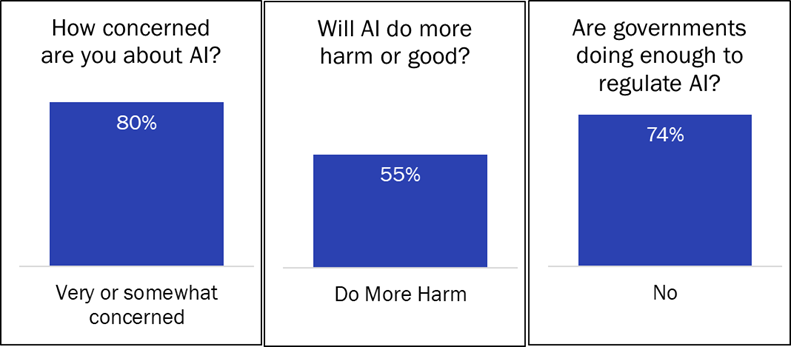
While investor enthusiasm for artificial intelligence remains strong, public sentiment is far more cautious. A recent Quinnipiac poll suggests that most Americans are skeptical that advances in AI will benefit them directly. Nearly two‑thirds of respondents report feeling more concerned than excited about the technology, with job displacement and insufficient regulation cited as the most significant worries.
Investor optimism, focused on productivity gains, efficiency improvements, and long‑term earnings potential, is likely to shape outcomes far more than general public sentiment. We anticipate that public concern will do little to slow AI’s progress, but it will influence how the technology is implemented. The key question is not whether AI becomes embedded in the economy, but how regulatory policy shapes its long‑term outcomes.
Picture3
Source: Quinnipiac University Poll, March 30, 2026
Media Inquiries
Veronica McKee, CMP, CMM
Direct Phone: 610.995.8758
Email: vmckee@haverfordquality.com
Katie Karsh
Direct Phone: 610.755.8682
Email: katie@gobraithwaite.com
Disclosure
These comments are provided as a general market overview and should not be relied upon as a forecast, research or investment advice, and is not a recommendation, offer, or solicitation to buy or sell any securities or to adopt any investment strategy. Opinions expressed are as of the date noted and may change at any time. The information and opinions are derived from proprietary and non-proprietary sources deemed by Haverford to be reliable, but are not necessarily all-inclusive and are not guaranteed as to accuracy. Index returns are presented for informational purposes only. Indices are unmanaged, do not incur fees or expenses, and cannot be invested in directly.
Investments in Securities are Not FDIC Insured · Not Bank Guaranteed · May Lose Value
Related News & Insights
With just days until the U.S. midterm elections, it is nearly impossible to escape the political news cycle. However, election results historically have had less impact on market performance than political candidates would have one believe.

The U.S. equity bull market just turned four years old. One defining characteristic of this bull market, and of growing concern to many investors, is its lack of breadth. Historically, narrow market leadership has often been viewed as a warning sign, raising concerns that the market’s foundation may be weaker than headline index returns suggest.

Investors are navigating a market environment increasingly shaped by a sequence of interconnected forces. Geopolitical tensions are keeping energy prices high. Rising energy prices are contributing to persistent inflation pressures. Elevated inflation is keeping the Fed hawkish and contributing to higher Treasury yields. But despite these headwinds, the U.S. economy continues to demonstrate resilience.
